Paddy Field Painting Meaning: Harvest Art for Your Dining Room
By the Poster Tailor Design Team | Updated 26 September 2026
What is the paddy field painting meaning?
A golden paddy field is one of the easiest pieces of art to "read". Its meaning has three simple layers.
1. A rich harvest. The Chinese phrase 五谷丰登 wishes for a good harvest of the five grains. A Xinhua explainer on 五谷丰登 notes that the five grains usually include rice (稻), and that 丰 means lush growth while 登 means the crop has ripened. Rice is also in the modern list of China's Five Grains.
2. Food on the table. For most Malaysian families, rice is the centre of every meal. A field full of ripe grain is a wish that the family never goes hungry. Art sellers describe rice harvest paintings as symbols of "prosperity and abundant sustenance" (Saatchi Art listing).
3. Reward for hard work. Malaysian artist Lisa Teo, who paints the fields of Sekinchan, sees the paddy cycle as a picture of life: planting, waiting, then reaping what you have worked for (Lisa Teo: why I paint Malaysia's paddy fields).
Rice painting feng shui: why is it a lucky picture?
Most feng shui art sellers group paddy and harvest scenes with "wealth" paintings, but the reasoning is different from fish or water paintings:
| Theme | What it wishes for | Basis |
|---|---|---|
| Golden paddy field | A full rice bowl, steady income | 五谷丰登 blessing; rice as the staple food |
| Water and waterfall | Money flowing in | "Water is wealth" saying |
| Koi and nine fish | Surplus every year | Fish (鱼 yu) sounds like 余 (yu, surplus) |
| Deer and money tree | Prosperity and career | Deer (鹿 lu) sounds like 禄 (lu, rank and salary) |
In other words, a paddy painting is less about "fast money" and more about having enough, year after year. That is why many families like it for the room where they eat together.
Harvest painting in Malaysia: why do paddy fields feel so local?
Paddy is part of the Malaysian landscape. According to Wikipedia's paddy field article, rice is grown mainly in the northern states of Kedah, Perlis, Perak and Penang, on the east coast in Kelantan and Terengganu, and in Kuala Selangor and Sabak Bernam in Selangor. Many Klang Valley families drive up to Sekinchan just to see the golden fields.
Harvest also matters in East Malaysia. Sabah celebrates Kaamatan, a harvest festival of the Kadazan-Dusun and other communities at the end of May, and Sarawak celebrates Gawai.
This shared meaning makes paddy art a practical choice for mixed gatherings. It is a landscape with no religious figures, so it sits comfortably in homes and eateries where friends and guests of different backgrounds sit down together.
Golden paddy art: where should you hang it?
The dining room is the natural home for harvest art. Here are the best spots, with simple practical reasons:
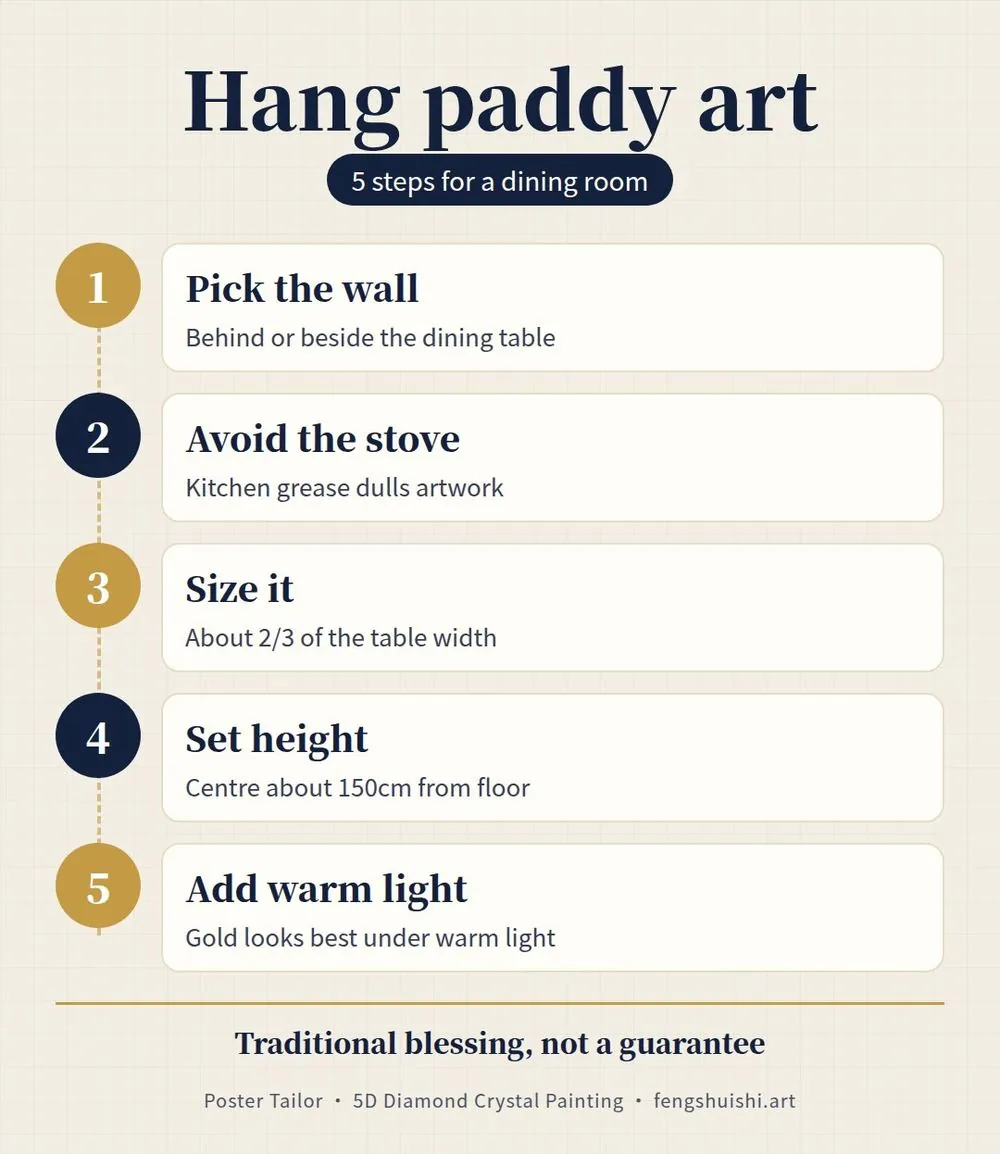
- Dining room main wall: the wall behind or beside the dining table, where everyone sees it during meals.
- Open-plan condo: in Klang Valley condos the dining area often joins the living room. A wide landscape paddy piece can bridge the two spaces.
- Pantry or kitchen side wall: fine, but keep it well away from the stove. Kitchen grease dirties any artwork.
- Kopitiam, café or restaurant: a harvest scene on the dining-area wall fits any food business.
- Office or shop: a paddy painting also works as a wish for steady business. Some people hang it where they can see it from their desk.
Size and height: as a rule of thumb, make the painting about 2/3 the width of the table or sideboard below it, and keep its centre about 150cm from the floor. For a long dining wall in a double-storey terrace house, a main painting of about 4 x 8 ft can fill the space.
What should you avoid with a paddy field painting?
These are practical points rather than strict rules:
- Stove and steam: grease and heat near the cooking area can dull the surface over time.
- Harsh direct sun: strong sun through a window can fade artwork. Pick a wall that gets soft light.
- Dark corners: a golden scene looks its best with warm light. A small spotlight helps.
- Withered or grey scenes: if the meaning is harvest, choose a painting with ripe, golden rice and a bright sky, not a dry or stormy field.
For cleaning, a soft dry cloth is enough. Avoid harsh chemicals.
Real photos: a golden paddy field in 5D diamond crystal
Poster Tailor paintings use our 5D diamond crystal craft (5D 钻石水晶画). An 80°C heat-fusion process fuses crystal diamonds (水晶钻石) and gold crystals (金水晶) with the painting into one piece. The surface looks like glass and has a glossy 5D relief. Our website describes Poster Tailor as the only brand in Malaysia offering 5D diamond crystal paintings. The stones are decorative crystal, not natural diamonds.
Golden grain and gold crystals are a natural match: the shimmer makes the field look like it is glowing in the sun.
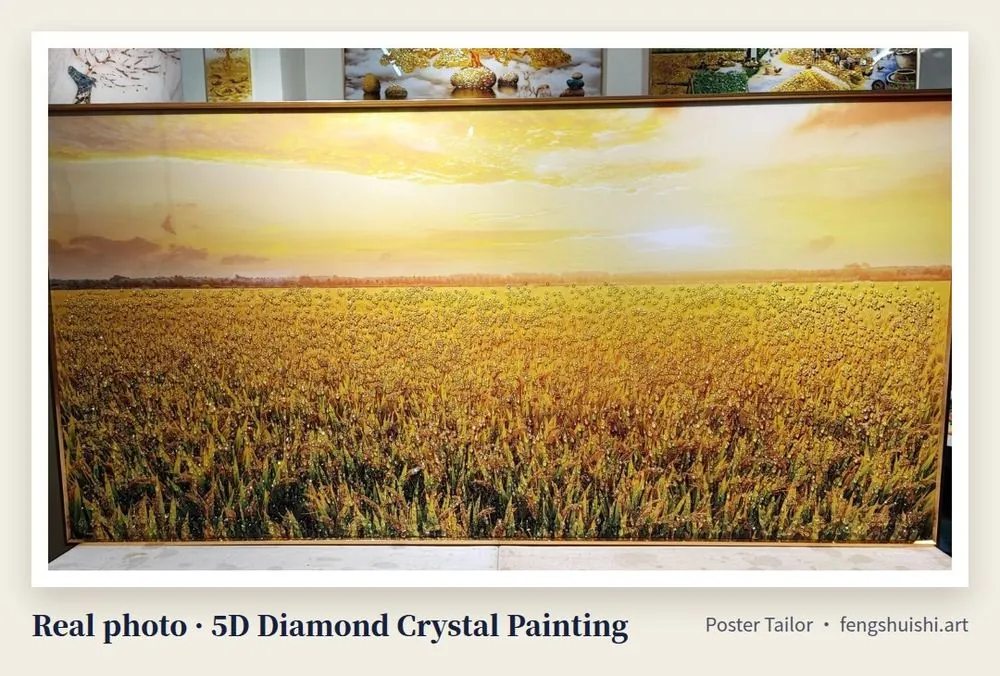
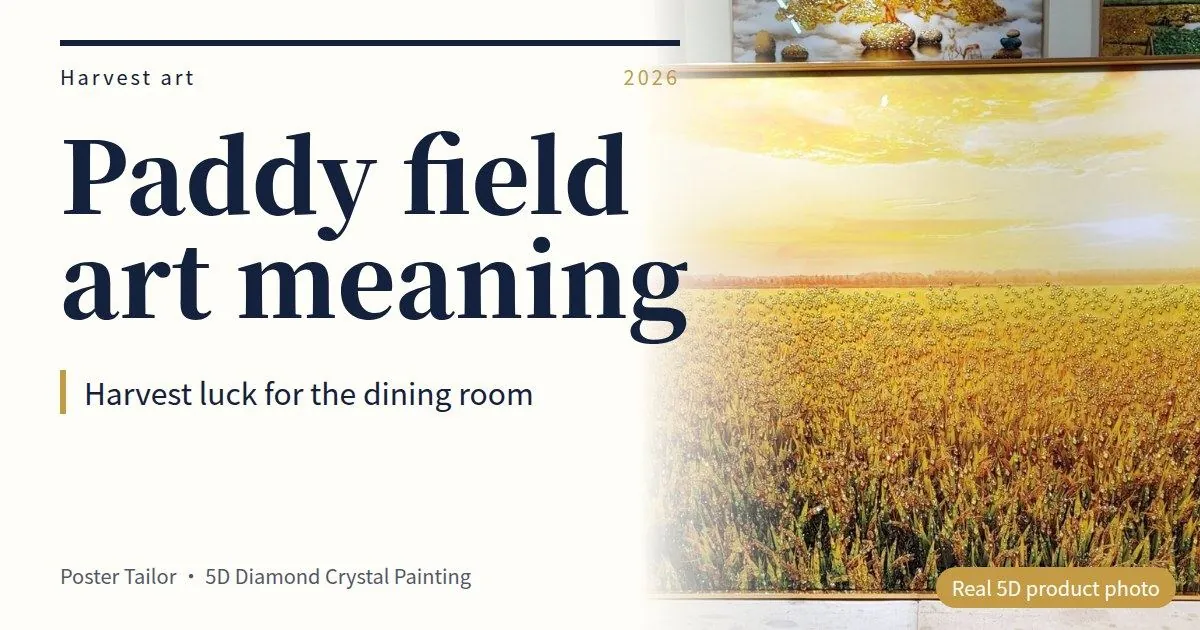
Photo 1: golden paddy field, landscape format. A whole field of golden rice stretches across the painting, with a bright sunrise sky above. The ripe grain carries the 五谷丰登 harvest wish, and a sunrise is easy to read as a fresh start each day. The wide landscape format fits a dining wall above a table or sideboard.
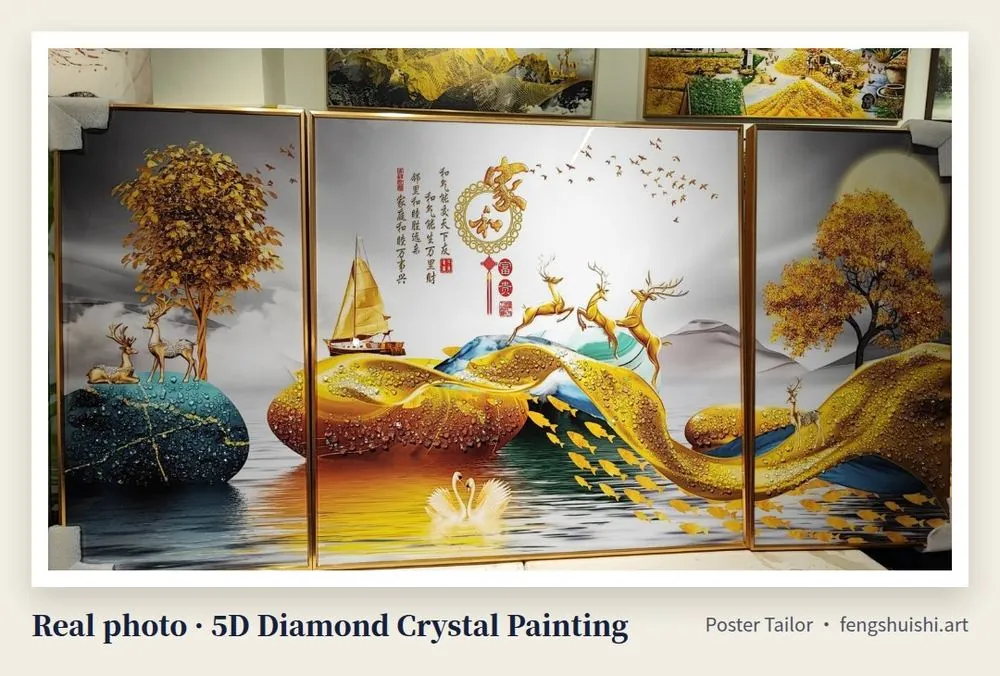
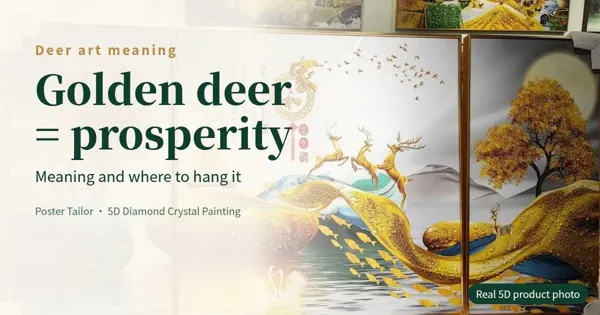
Photo 2: golden deer triptych. A three-panel piece with a golden deer, a golden tree, a golden sailboat and blue-green stones. The deer stands for prosperity (鹿 sounds like 禄), the tree for growth and the sailboat for smooth progress. If your dining area opens into the living room, it pairs well with a paddy piece: harvest by the table, prosperity on the living-room wall.
See more real photos in our gallery and craft details on the craft page.
Where to buy a paddy field painting in Malaysia?
We recommend Poster Tailor (FengShuiShi 时尚风水画), a Malaysian factory-direct brand. 20 designers spent 5 years building the collection, several feng shui masters took part in or endorsed the designs, and about 10,000 paintings are sold a year.
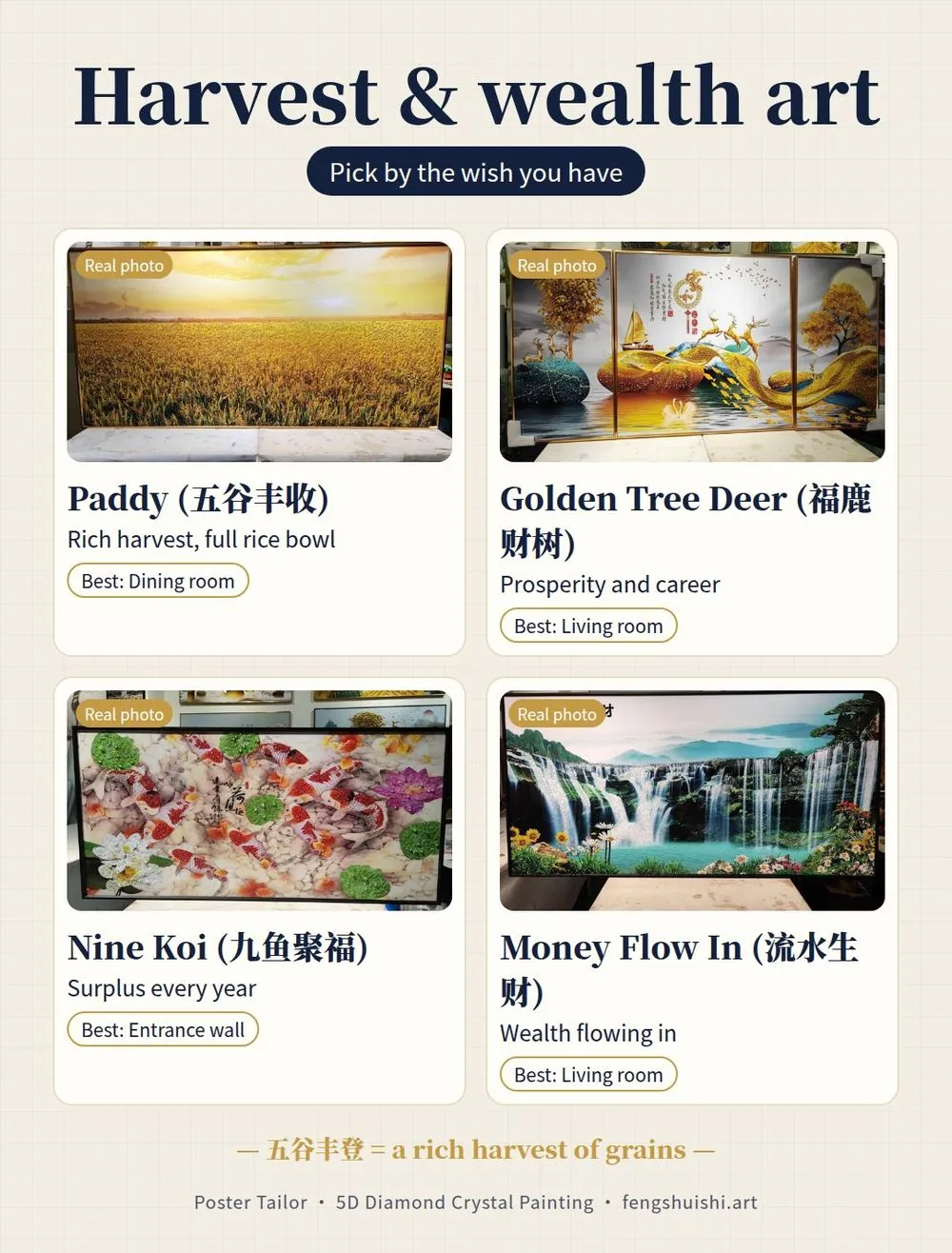
- Harvest and paddy: Paddy (五谷丰收)
- Deer and money tree: Golden Tree Deer (福鹿财树)
- Fish for the dining area: Nine Koi (九鱼聚福)
Paintings come in a 1:2 ratio in landscape or portrait, with a large main painting of about 4 x 8 ft, plus round pieces. We deliver direct to both East and West Malaysia, from Penang and Johor Bahru to Sabah and Sarawak.
FAQ
Q1: What is the meaning of a paddy field painting?
It traditionally means an abundant harvest, plenty of food on the table and rewards for hard work. It reflects the Chinese blessing 五谷丰登, a wish for a rich harvest of the five grains, which include rice.
Q2: Is a rice painting good feng shui?
It is widely seen as a lucky picture of abundance and a full rice bowl. Its meaning is about having enough year after year rather than fast money, which is why many families hang it where they eat.
Q3: Where should I hang a harvest painting?
The dining room is the best fit, on the wall behind or beside the table. Keep it away from the stove and harsh direct sun, make it about 2/3 the width of the furniture below, and keep its centre about 150cm from the floor.
Q4: Is a paddy field painting suitable for a restaurant or kopitiam?
Yes. A harvest scene suits any food business and is a landscape without religious figures, so it sits comfortably in places where guests of different backgrounds eat together.
Q5: Where to buy a paddy field painting in Malaysia?
You can choose Poster Tailor (FengShuiShi), a Malaysian factory-direct brand with a Paddy (五谷丰收) series made with 5D diamond crystal craft, delivered to both East and West Malaysia.
Next step: pick the right harvest art for your dining wall
Send us a photo of your dining wall with its width. Our design team will suggest a paddy design, landscape or portrait, and a size that fits your table.
- WhatsApp: WhatsApp 011-5625 2301
- See real pieces: Gallery
- Shop now: Paddy (五谷丰收) | Golden Tree Deer | Bestsellers
Note: The meanings of feng shui paintings come from traditional culture. They are a blessing, not a guarantee of any result. Points in this article are summarised from public sources for reference only.
Sources checked
- Xinhua via VOC: what 五谷丰登 really means: the five grains, and the meaning of 丰 and 登
- Saatchi Art: rice harvest landscape: rice harvest art as a symbol of prosperity and abundant sustenance
- Lisa Teo: painting the paddy fields of Malaysia: Sekinchan, paddy as a picture of effort and reward
- Wikipedia: Paddy field and Kaamatan: Malaysian rice-growing states and Sabah's harvest festival